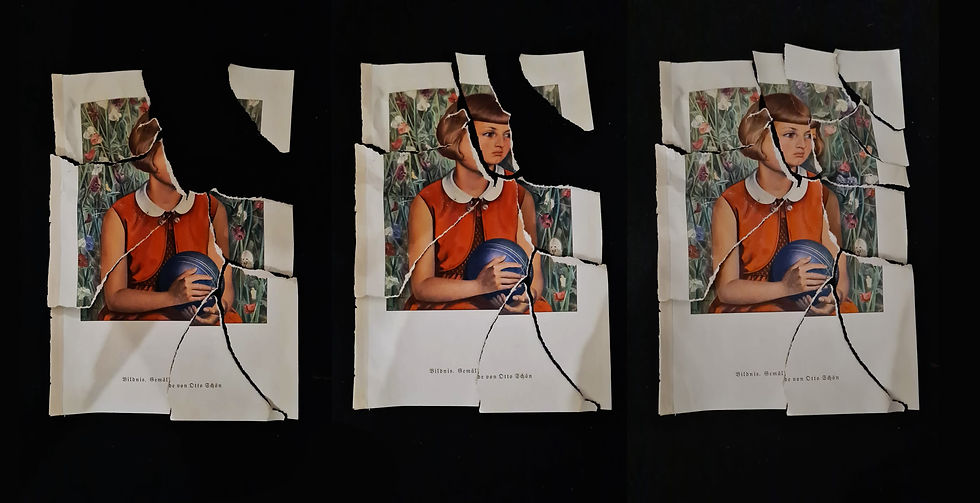
AN INTIMATE DANCE BETWEEN BODY, MEMORY AND ARCHIVES.
ESTREMO REMOTO is a choreographic journey through Italy’s State Archives: a project of creation, research and archival-heritage enhancement curated by Zerogrammi and Arearea.
PREMISE
State Archives are places where time does not pass: it settles. Papers, registers, maps and administrative records preserve what once needed to be said, signed and classified.
“Filed on record.”“Nothing further to add.”
Estremo Remoto is conceived as a choreographic and performative project exploring the relationship between institutional memory and embodied memory, between what has been archived and what continues to act in the present.
In this form, the project unfolds as a distributed journey through Italy’s State Archives, understood as living spaces, temporal thresholds and places of creation.
ARTISTIC CONCEPT
Estremo Remoto works with what is distant in time yet still active: forgotten documents, anonymous signatures, precise dates and inventories.
“General register, year…”“Sheet no. …”
Dance enters the archive not to illustrate it, but to reactivate it.
The body becomes an instrument of listening, a living index, a marginal note.
The work explores the relationship between body and document, archive and presence, preservation and disappearance.
DRAMATURGICAL NOTES: CHOREOGRAPHIC RESEARCH IN THE ARCHIVES
Estremo Remoto emerges from an attraction to the delicate weave of human memory held within archival documents. We are not interested in major events, but in small stories, marginal details and minor traces left behind by time. After all, our humanity is made of narratives—of what we tell and what we forget.
The choreographic act thus becomes a way of rediscovering these forgotten fragments, of giving body to narratives buried in bureaucratic formulas, administrative records, and gestures once carefully noted down and then forgotten.
The choreographer and performers seek in the archives a kind of second skin of history, made not of celebrated names but of ordinary people, of moments recorded and then filed away. Every signature, every date and every marginal note becomes an invitation to imagine, reconstruct and dance what has been lost.
In this sense, the archive is not only a place of preservation but also a ground for creation. It is a space in which choreography becomes an act of listening, poetic recovery and embodied narration. The body becomes a sensitive archivist, leafing through not only documents but also absences, gaps and silences.
The dramaturgical notes of Estremo Remoto are therefore an invitation to see the archive as a place where the human re-emerges through gesture. They are a call to remember that our collective history is made of small narratives, marginal details and that which has been forgotten, yet can speak again through dance.
STATE ARCHIVES AS SPACES OF CREATION
Each participating State Archive becomes a site for artistic residency, a source of dramaturgical material and a space for site-specific performance.
Stairways, corridors, reading rooms and storage facilities are temporarily inhabited by living presences.
“Faithfully transcribed from the original.”“Certified as true.”
Each encounter generates a unique variation of the project.
PROJECT STRUCTURE
PHASE 1 — ARCHIVAL RESEARCH
Meetings with archivists and research staff
Selection of collections and documents
Gathering formulas, languages and recurring structures
“Having examined the application submitted…”
PHASE 2 — ARTISTIC RESIDENCY
Choreographic residency within the Archive
Translation of materials into physical scores
Ongoing dialogue between artists and institution
PHASE 3 — PUBLIC PRESENTATION
Site-specific performance
Performative and installation-based actions
Public encounters, talks and performative tours
“As of today.”
PHASE 4 — PROJECT ARCHIVE
Creation of a parallel archive
Video, sound and textual traces
A shared digital presentation with the participating Archive.
“Filed.”
DRAMATURGY AND LANGUAGE
The language of Estremo Remoto is essential, layered and non-narrative.
Dance takes the form of a physical consultation: leafing through, waiting, repeating, classifying.
“Read, confirmed and signed.”
The body does not interpret the document; it absorbs its rhythm and weight.
RELATIONSHIP WITH THE AUDIENCE
The audience enters spaces normally devoted to consultation. They are invited to slow down and to share silence and proximity.
The experience is designed for small groups, fostering concentration and attentive listening.
OBJECTIVES
To enhance State Archives as contemporary cultural spaces
To activate new ways of experiencing archival heritage
To create a replicable model of collaboration between archives and the performing arts
To build a national map of artistic journeys through archives
PARTNERS AND NETWORK
Italian State Archives
Ministry of Culture – Directorate-General for Archives
Regions and local authorities
Residency spaces, festivals and universities
Local communities
OUTPUTS
Estremo Remoto site-specific performances
Artistic residencies
Public and educational events
A digital project archive
Final publication
una produzione / a production ZEROGRAMMI + AREAREA | in collaborazione con / in collaboration with DANCEPROJECT NETWORK_ON/OFF CONFINI, ARCHIVIO DI STATO DI TRIESTE, ASSOCIAZIONE ACTIS MYSTIPHOENYA, ARCHIVI DI STATO DEL PIEMONTE | con il sostegno di / with the support of MIC MINISTERO DELLA CULTURA, REGIONE PIEMONTE, REGINE FRIULI VENEZIA GIULIA
genere - genre DANZA + INSTALLAZIONE / DANCE + INSTALLATION
pubblico - audience TOUT PUBLIC ( 7+)
allestimento - staging SITE SPECIFIC (INDOOR / OUTDOOR)
stato del progetto - project status IN CREAZIONE / IN DEVELOPMENT
attivazione - activation SPETTACOLO SHORT FORMAT / INSTALLAZIONE / PERFORMANCE, INSTALLATION
TAPPE
AS1 (TRIESTE)
Marta Bevilacqua e Stefano Mazzotta in scena danno vita e forma a questa lacerazione e a questo ininterrotto desiderio di ricongiungimento con una danza fatta di linee curve, che anela all’abbraccio negato, lo sfiora, lo perde, lo sogna, lo esige. Nel volto di Marta-Maria il dolore via via si radica e diventa macigno, ma non si irrigidisce, non cede alla rassegnazione. Commovente e, se possibile, ancor più intima la danza di Stefano Mazzotta, il cui desiderio di ricongiungimento sembra nascere a poco a poco, fragile prima, per poi divenire vitale urgenza. L’azione si avvia alla sua conclusione con parole sussurrate, ma nell’intimo forse gridate, da parte dei due interpreti, e un’atmosfera rarefatta, come di sospensione. Francesca Maria Rizzotti | KLP
SUL PROGETTO
Ogni azione d’archivio ha a che fare con un arco cronologico che si può esprimere con estremo remoto o estremo recente. Il progetto Estremo Remoto, mutuando questa definizione nel suo titolo, propone allo spettatore un affondo emotivo sul tema della memoria e delle relazioni che, nel tempo, ci legano a luoghi, momenti, persone radicandoci ad essi come a stazioni di posta di un articolato viaggio di vita scandito in partenze e ritorni. La ricerca si sviluppa attraverso un punto di osservazione particolare sui registri di accoglimento degli esposti e orfani tra il 1770 e il 1909 nell’area austroungarica dell’Italia. La serie su cui si è svolta la ricerca è costitui- ta da 82 registri che tracciano l’accoglimento delle creature abbandonate e consegnate alla ruota degli esposti. La ruota degli esposti era una bussola girevole di forma cilindrica in legno, divisa in due parti: una rivolta verso l’esterno e una verso l’interno. Attraverso uno sportello, era possibile collocare gli esposti, cioè i neonati abbandonati, senza essere visti dall’interno. Facendo girare la ruota, essa andava a combaciare con un’apertura all’interno, dove lo sportello veniva aperto e al neonato potevano essere assicurate le cure necessarie. Spesso vicino alla ruota vi era una campanella, per avvertire chi di dovere di raccogliere il neonato, ed anche una feritoia nel muro, una specie di buca delle lettere, dove mettere offerte per sostenere chi si prendeva cura degli esposti. Per un eventuale successivo riconoscimento da parte di chi l’aveva abbandonato, al fine di testarne la legittimità, venivano inseriti nella ruota assieme al neonato monili, documenti o altri segni distintivi, spesso di visi in due parti (una accompagnava il bambino e l’altra rimaneva alla madre) definiti segnali di esposizione, catalogati dalle strutture di accoglimento come veri e propri allegati ai registri.
SULLA CREAZIONE DI UNA PRIMA DANZA D’ARCHIVIO
Partendo dai segnali di esposizione Marta Bevilacqua (Compagnia Arearea - Udine) e Stefano Mazzotta (Compagnia Zerogrammi – Torino) attivano una ricerca coreografica che ha per coordinate concetti come corpo/memoria/archivio/confine e che rintraccia nella piccolezza il senso della loro danza, lo spazio dell’azione e la relazione diretta con il pubblico. Il progetto ha mosso i suoi primi passi tra i corridoi e le stanze studio dell’Archivio di Stato di Trieste in una forma site specific per poi trovare spazio in ambienti museali, foyer e sale teatrali.
La danza si sviluppa in un susseguirsi di azioni minute e delicate tese alla preparazione di un grande viaggio, al compimento di un grande salu- to. Nello sviluppo del racconto, in una coreografia minuziosa per due interpreti, lo spazio si restringe rivelando il senso e la potenza evocativa delle piccole cose. Estremo Remoto è uno spazio di cura ed è anche un tempo di riflessione sociale: così come la danza è la risultante di mo- vimenti e gesti che ci precedono e appartengono alla memoria collettiva, allo stesso modo la storia è la risultante di molte vite apparentemente insignificanti che, intrecciate, vivono i fatti. L’approccio archivistico ne compatta oggetti e geografie che fanno della persona una memoria che danza.

