
STEFANO MAZZOTTA
// ZEROGRAMMI
ALCESTI (O DEL SUONO DELL'ADDIO)
(...) the creation stands out for its communicative power, clarity and rigor of imagery, and intense emotional impact. Stefano Mazzotta confirms himself as a mature authorial voice, and Zerogrammi as a production reality now in full development, ready to engage with large-scale compositions: a broad perspective which, in a time dominated by studies and short performances, is often missing in the work of many of their contemporaries.
Maddalena Giovannelli, Hystrio
(...) the choreographer plays with aesthetics and technique in a highly distinctive way, convincing and captivating precisely because his works are filled with mysticism, humanity and freedom. The classical theme he has chosen is deeply meaningful, and within the performance its limited abstraction is balanced by a strong sense of narration and reflection. A high-quality form of storytelling, carrying both weight and an intensely powerful message.
Giselle Roiz Miranda, GBOpera Magazine
It is through the expressive power of dance that the drama of Alcestis becomes contemporary, turning into a question about love and about how much, both universally and individually, each person is willing to give of themselves within a relationship. This emerges above all in the final pas de deux, an encounter and clash between Alcestis and the one who embodies life and love itself for her, without whom no survival could ever be possible. Repeated and heartfelt applause greeted Zerogrammi at the Ridotto.
Clelia Stefani, Il Giornale di Vicenza
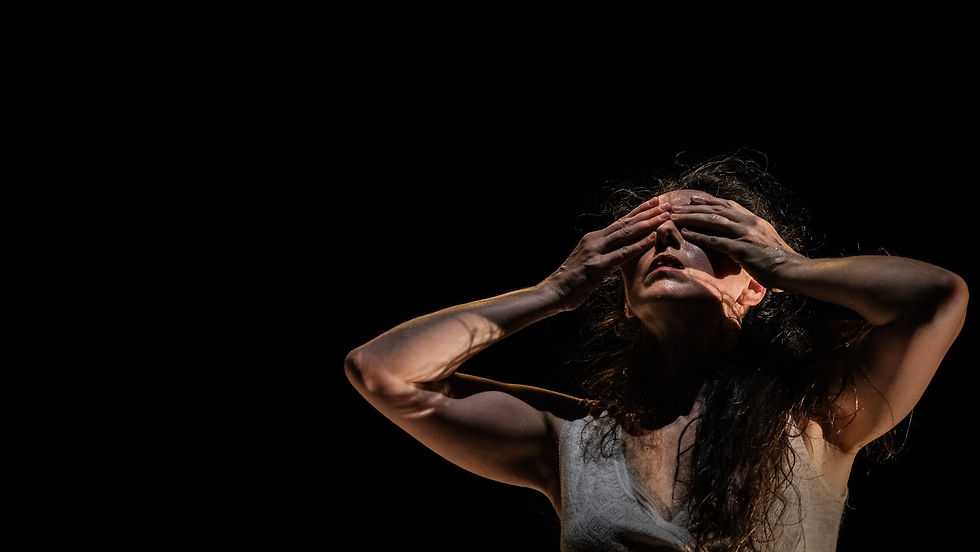
Once again he saw her face, turned back toward him, in a smile bright as hope, as a promise: to return to him alive from the dark realm of death... Then he pressed his hands against his forehead, kneeling, so as to see nothing but that smile.
(Alcestis, Rainer Maria Rilke)
Alcestis is the narration of a heartbreaking and tragic farewell between two lovers, a recurring motif in the literature of all times and all latitudes. A tragedy charged with immense love, it privileges the human dimension of its story, distancing itself from other mythical farewells such as that of Hector and Andromache at the Scaean Gates, or Shakespearean partings.
It is the story of a farewell sealed by the most sublime of sacrifices, a departure that becomes meditation and remembrance through the gestures and words of its silent protagonist. Alcestis reveals to the reader a nostalgic and melancholic horizon that recalls — more through the description of her figure and actions than through her own words — some of the most moving farewells in literature: from Ariadne to Creusa, from Werther to Jacopo Ortis, Emma Bovary, ’Ntoni in The House by the Medlar Tree, Hölderlin, Rimbaud, Kafka and Neruda.
An entire world withdraws in farewell, surviving only within the traveler’s longing. Day dies and the moon rises. Light slowly recedes, heralding the arrival of night. The farewell narrated by Alcestis stands on the threshold of a space, at the edge of a departure into the unknown.
Within the presence of Admetus, within the landscape of familiar things, there already emerges the shadow of an ultimate distance: the infinite space that separates. A space not narrated by Euripides, but only evoked — empty and filled with deafening silence. A span of time impossible to define in terms of duration, stretching from the moment Alcestis decides to leave the world of the living to the instant of her sacrifice.
It is within this span of time that the creation finds its foundation: a silent monologue, a soliloquy on the essence of memory and the profound truth of things, multiplied on stage through a plurality of performers.
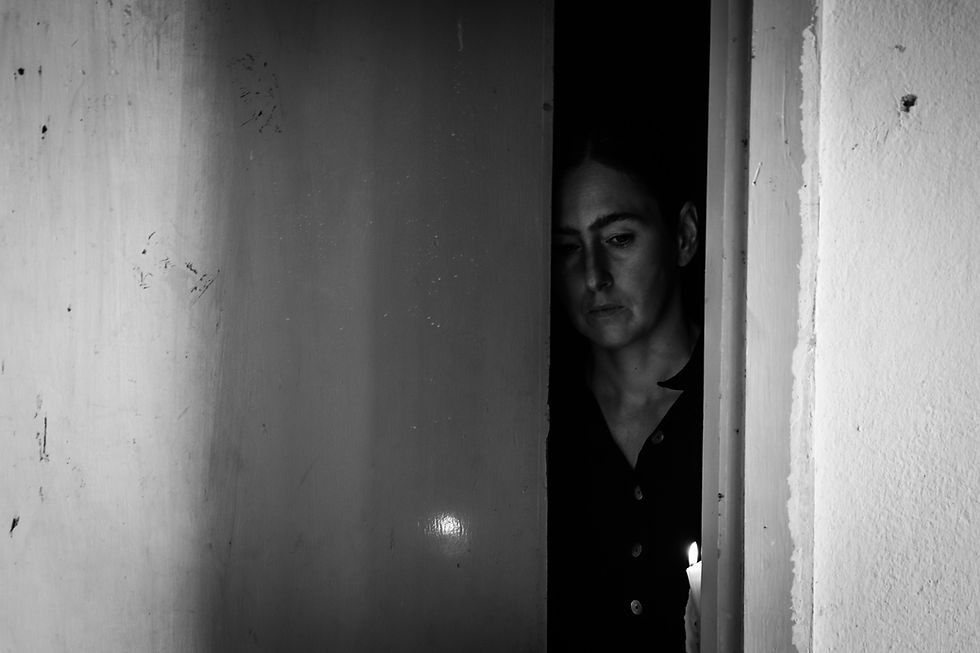
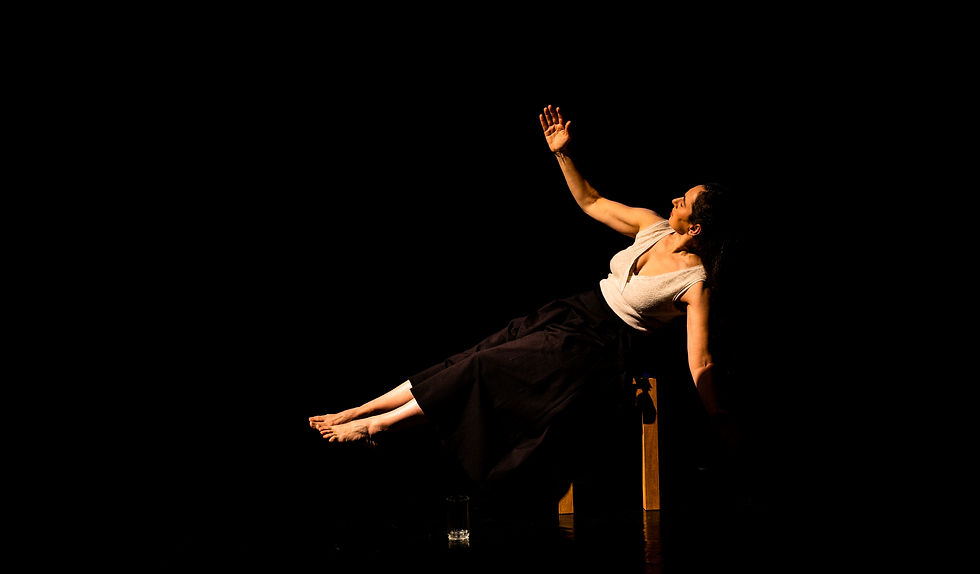
Alcestis gazes nostalgically toward the distant horizon behind her. A vertigo of memory. Her body sounds the Requiem of a lost elsewhere and holds the final breath separating her from a new and unknown condition. From this threshold she moves beyond the prison of oblivion and noise, entering a poetic, silent and suspended time. Presence of emptiness.
Its language is fragmented, broken apart — at times a living voice, at others the echo of music and sounds belonging to a farewell like so many others: the sound of coats being put on before leaving home, the light touch of a kiss on the cheek, and finally a silent “lifting away” of the soul.
progetto, regia e coreografie
project, direction and choreography
Stefano Mazzotta
collaborazione all'allestimento
collaboration to the direction
Chiara Guglielmi
con
with
Chiara Michelini, Chiara Guglielmi, Arabella Scalisi, Mariella Celia, Gabriel Beddoes, Stefano Roveda, Gabriel Beddoes, Simone Zambelli, Giuseppe Muscarello, Tommaso Serratore
costumi e progetto scenografico
costumes and scenographic project
Stefano Mazzotta
elementi scenografici
sets
Fulvio Casacci
disegno luci
light design
Alberta Finocchiaro
produzione
production
Zerogrammi
in collaborazione con
in collaboration with
FONDERIA39 (It), Fondazione Nazionale della Danza (It), Theater Osnabrueck (D), Agorà Coaching Project (It), Teatro Nuovo Torino (It), CASA LUFT (It)
con il sostegno di
with the support of
Regione Piemonte, MIBAC
genere → genre TEATRODANZA/DANCETHEATRE
pubblico → audience 14+
durata → duration 1h

.jpg)

.jpg)
.jpg)

.jpg)
Valentina Tibaldi
(production and distribution management)
+39 375 1355401
produzione@zerogrammi.org
Maria Elisa Carzedda
(production secretariat)
+39 011 19706507
segreteria@zerogrammi.org
Stefano Mazzotta
(artistic direction)
direzione@zerogrammi.org
general information
+39 011 19706507
info@zerogrammi.org


.jpg)


.jpg)

.jpg)


.jpg)


.jpg)

.jpg)


.jpg)

.jpg)
.jpg)

.jpg)
.jpg)
.jpg)


.jpg)
.jpg)

.jpg)
.jpg)
.jpg)

.jpg)

.jpg)
.jpg)
.jpg)

.jpg)
.jpg)
.jpg)


.jpg)

.jpg)
.jpg)


.jpg)
.jpg)


.jpg)

.jpg)


.jpg)


